
Every year on the 21st of March, Australia pauses to celebrate something genuinely worth celebrating: each other. Harmony Day — now also recognised as Harmony Week across the full third week of March — is a national occasion that honours the cultural diversity of our communities, affirms the dignity of every person regardless of background, and invites all of us to reflect on what it means to truly belong.
At Kenmore Hills Early Learning, we believe that the foundations of inclusion, empathy, and respect for diversity are not built in primary school or secondary school. They are built right here, in the earliest years of life, through lived experiences, stories, relationships, and the gentle, consistent modelling of adults who hold these values at the centre of everything they do.
Harmony Day is not just a date on the calendar for us. It is an opportunity to celebrate the richness of our community and to deepen the everyday work of culturally responsive, inclusive early childhood education that shapes the way young children understand themselves and the world around them.
Why Early Childhood Is the Most Important Time to Teach Diversity and Inclusion
The science of early brain development is unambiguous on this point: the first five years of life are the most formative period for the development of social attitudes, empathy, identity, and sense of belonging. During this window, young children are not only learning to walk and talk and count — they are building the neural architecture that will underpin how they relate to other people for the rest of their lives.
Research from the Australian Human Rights Commission and developmental psychologists around the world consistently shows that children begin noticing and making meaning of physical and cultural differences from as early as six months of age. By age three, many children have already formed rudimentary social attitudes based on what they see, hear, and experience in their environments.
This is not something to be alarmed by — it is something to be deeply intentional about. If we want young children to grow into adults who value equity, practise inclusion, and genuinely celebrate difference, we must begin planting those seeds now, thoughtfully and consistently, through the quality of the environments we create, the stories we tell, the materials we provide, and the way we respond to the inevitable questions young children ask about why people look, sound, speak, and live differently.
Harmony Day gives us a beautiful, shared occasion to make that work visible and celebratory. But the best early learning settings — including ours here in Kenmore Hills — make this work visible every single day.
What Is Harmony Day, and What Does It Mean for Little Ones?
Harmony Day was established by the Australian Government in 1999 to coincide with the United Nations’ International Day for the Elimination of Racial Discrimination. Its symbolic colour is orange — chosen to represent social communication and a sense of freedom and a spirit of openness — and its central message is beautifully simple: Everyone belongs.
For young children, complex concepts like racial discrimination or multiculturalism are not the entry point. The entry point is something far more immediate and felt: Do I see myself here? Do people who look and sound and live like me belong here? And do I feel welcomed, valued, and celebrated for exactly who I am?
These are the questions that the environment of a quality early learning centre should answer with a resounding yes — not just on the 21st of March, but every morning a child walks through the door.
When a child sees their family’s culture reflected in a picture book on the shelf, hears a greeting in their home language, shares a meal that connects to their heritage, or watches their educator respond with genuine curiosity and warmth to cultural difference, they receive a message that goes far deeper than any lesson: I matter. We all do.
Harmony Day Activities for Early Learners: Ideas That Go Beyond the Orange T-Shirt
Wearing orange on Harmony Day is a joyful, visible act of solidarity — and we absolutely encourage it. But meaningful diversity and inclusion education in the early years goes well beyond a colour. Here are some rich, developmentally appropriate ways we bring Harmony Day to life with our little learners:
Sharing Our Stories Every family has a story. We invite families to share a piece of their cultural heritage with our community — a traditional recipe, a photograph, a song, a game, a piece of fabric, or a word in another language. These contributions become part of the living curriculum, and they send a powerful message to children that their family’s story is valued and worth knowing.
Exploring World Music and Dance Music is a universal language, and young children respond to it with their whole bodies. Incorporating music and movement from a diverse range of cultural traditions — African drumming rhythms, Indonesian gamelan, Aboriginal and Torres Strait Islander songlines, Bollywood beats, Celtic folk melodies — opens children’s ears and imaginations to the beautiful breadth of human expression.
Cooking and Tasting Together Food is culture made tangible. A simple cooking experience — making roti, sushi rice, fruit skewers with tropical fruits from different regions, or a simple dhal — invites children into sensory, cultural, and mathematical learning all at once. Sharing food across cultural boundaries is one of the oldest and most powerful acts of human connection.
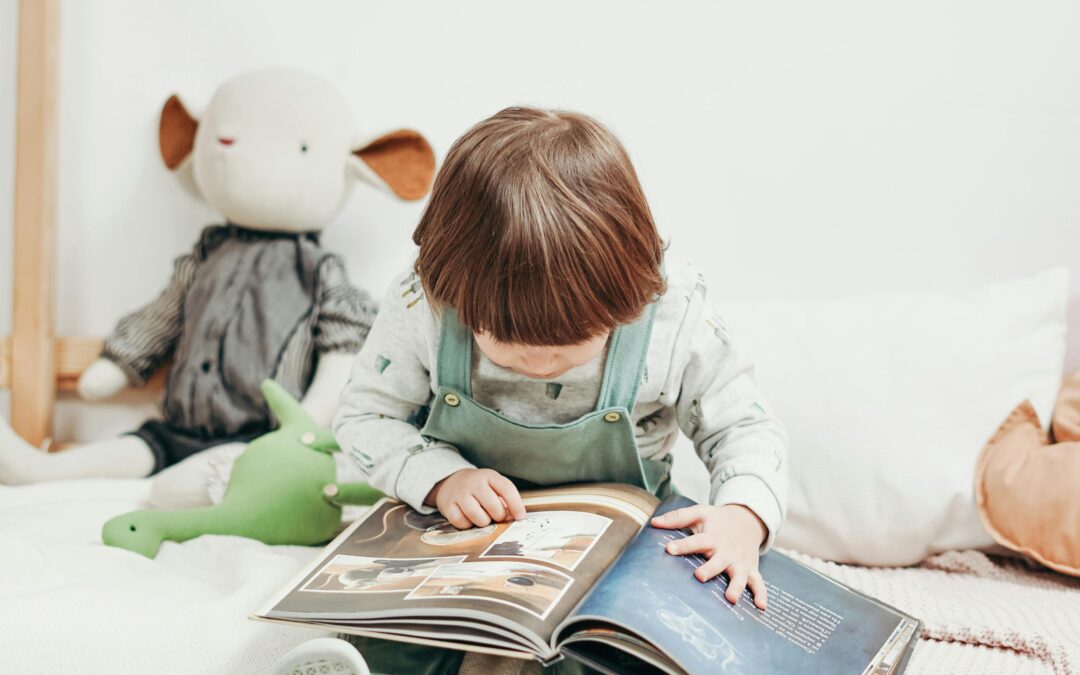
Diverse Books and Storytelling The books we place in the hands of young children shape their understanding of who matters, whose stories are worth telling, and what normal looks like. A genuinely diverse book collection — one that includes characters from a wide range of cultural backgrounds, family structures, abilities, and lived experiences, portrayed as protagonists rather than as curiosities — is one of the most important elements of an inclusive early learning environment.
Language Celebration Australia is one of the most linguistically diverse nations on earth. Celebrating the many languages spoken in our community — learning to say hello, thank you, or well done in a family’s home language — is a simple, deeply affirming practice that normalises multilingualism and honours children’s full linguistic identities.
Art and Creative Expression Inspired by Cultural Traditions Dot painting, henna patterns, Aboriginal weaving techniques, origami, batik printing, and Rangoli designs all offer rich creative experiences that simultaneously open windows into cultural traditions and histories. These are not costumes or props — they are invitations into respectful, curious engagement with living cultural practices.
Circle Time Conversations About Similarity and Difference Young children are natural philosophers. With thoughtful facilitation, circle time conversations about what makes us the same and what makes us different can be some of the richest language and thinking experiences in the early learning day. Questions like “What does your family love to do together?” or “What is something special about your home?” invite sharing without singling anyone out.
Understanding Culturally Responsive Practice
Harmony Day is a wonderful catalyst, but the deeper aspiration is culturally responsive practice — a way of designing, operating, and teaching that genuinely reflects and respects the cultural identities of every child and family in the community.
Culturally responsive early childhood education means going beyond tolerance — which implies merely putting up with difference — toward genuine curiosity, affirmation, and celebration. It means:
Auditing the physical environment regularly to ask whether the books, images, dramatic play props, dolls, puzzles, and materials reflect the full diversity of our community and of the wider world. It means ensuring that families from culturally and linguistically diverse backgrounds feel genuinely welcomed, not simply accommodated. It means educators reflecting on their own cultural assumptions and biases with honesty and humility — an ongoing, lifelong process. It means embedding Aboriginal and Torres Strait Islander perspectives into the everyday curriculum as a non-negotiable expression of respect for the world’s oldest living cultures and for the country on which our centre stands.
At Kenmore Hills Early Learning, we are committed to this ongoing, evolving work. We know we are always learning, and we welcome the conversations, contributions, and wisdom that our diverse community of families brings to that process.
Talking About Difference: What to Say When Children Ask
One of the most common questions educators and families ask is: how do I respond when a young child asks about race, skin colour, disability, or other visible differences?
The most important thing to know is this: silence is not neutral. When an adult changes the subject, shushes a child’s question about why someone looks different, or says “we don’t notice those things,” they inadvertently communicate that difference is shameful or dangerous — exactly the opposite of the message we want to send.
Young children are not being rude when they ask why someone’s skin is a different colour, or why a classmate’s family speaks a different language at home. They are doing what young children do: noticing their world and making sense of it. Our job is to meet those questions with calm, warm, age-appropriate honesty.
“People come in lots of different skin colours, and they’re all beautiful. What colour would you say your skin is?”
“Yes, Amara’s family speaks Swahili at home. That’s another language, just like we speak English. Isn’t it wonderful that there are so many languages in the world?”
“Every family is different, and that’s what makes our community so interesting. What makes your family special?”
These responses validate the child’s observation, provide accurate and affirming information, and invite continued curiosity — which is precisely what we want.
The Role of Harmony Day in Building Anti-Bias Foundations
The anti-bias approach to early childhood education, developed by Louise Derman-Sparks and colleagues, provides a powerful framework for thinking about diversity and inclusion in the early years. It rests on four core goals: helping children develop a positive, knowledgeable identity; building empathy and respect for others; helping children think critically about unfairness; and empowering children to speak up for themselves and others.
Harmony Day, approached thoughtfully, speaks to all four goals. It is an opportunity to affirm identity, to build empathy, to name and celebrate difference rather than flatten it, and to plant the earliest seeds of social justice — the understanding that every person deserves to be treated with dignity and that our differences are a source of collective strength rather than division.
For toddlers and preschoolers, this does not look like a lecture. It looks like a book, a song, a meal shared together, a moment of genuine curiosity met with warmth. It looks like an environment where every child sees themselves reflected and celebrated. It looks like an educator who notices and gently responds when one child excludes another — “In our centre, everyone is included. Let’s think of a way to play together.”
Small moments. Enormous impact.
Acknowledging Country: Our Commitment to First Nations Perspectives
No conversation about diversity and inclusion in Australia is complete without an explicit acknowledgement of the world’s oldest continuing cultures. Our centre sits on the lands of the Turrbal and Jagera peoples, and we hold a deep respect and gratitude for their ongoing custodianship of this country.
Embedding Aboriginal and Torres Strait Islander perspectives into our everyday practice — through storytelling, art, language, connection to country, and the regular, genuine celebration of First Nations cultures — is not a Harmony Day activity. It is a year-round commitment that we hold as fundamental to what it means to operate a quality, inclusive early learning service in Australia.
We encourage families to explore this dimension of our curriculum with their little ones at home too, through books, storytelling, and conversations about the deep history and living culture of Australia’s First Peoples.
For Families: Continuing the Conversation at Home
The most powerful diversity education happens not just at the centre but across a child’s whole life — at home, in the community, in the stories families tell and the choices families make about who they spend time with, what they watch, and what they celebrate.
Here are some simple ways to extend Harmony Day learning at home throughout the year:
Fill your bookshelves with stories featuring protagonists from diverse cultural backgrounds, family structures, and lived experiences. Your local library is an excellent and free starting point.
Cook a meal from a different cultural tradition together. Talk about where it comes from, what the ingredients are, and what the occasion means in that culture.
Listen to music from around the world during car trips or mealtimes. Ask your little one what they notice, what they like, how it makes them feel.
Be intentional about the shows and media your children consume. Representation matters enormously, and a diverse media diet shapes a child’s understanding of whose lives and stories matter.
Talk openly and calmly about differences when your child notices it — in the street, in a book, in a conversation. Model curiosity and warmth.
Attend cultural events and festivals in the Brisbane community. The Multicultural Festival, NAIDOC Week events, Lunar New Year celebrations, and Diwali festivities all offer wonderful, joyful, lived experiences of cultural richness.
A Community of Belonging
At Kenmore Hills Early Learning, our vision is to be a place where every child, every family, and every educator feels genuinely seen, valued, and celebrated — not in spite of who they are, but because of it. Harmony Day gives us the most wonderful reminder of why that work matters and how much beauty there is in the full tapestry of our community.
To every family who walks through our doors: you belong here. Your story matters. Your culture enriches us. And the little one you drop off each morning is growing up in a community that is actively, intentionally, joyfully learning to hold the whole world with open arms.
Happy Harmony Day from all of us at Kenmore Hills Early Learning. 🧡
📞 (07) 3088 2081 📍 82 Brookfield Road, Kenmore Hills 🌐 www.kenmorehillsearlylearning.com.au
Sources
- Australian Human Rights Commission – Racism. It Stops With Me: Harmony Day Resources https://humanrights.gov.au/our-work/race-discrimination/projects/racism-it-stops-me
- Australian Government – Harmony Day: Official Program and History https://www.harmony.gov.au
- Derman-Sparks, L. & Edwards, J.O. – Anti-Bias Education for Young Children and Ourselves (National Association for the Education of Young Children, 2010) https://www.naeyc.org/resources/pubs/books/anti-bias-education
- Australian Children’s Education & Care Quality Authority (ACECQA) – Belonging, Being & Becoming: The Early Years Learning Framework for Australia (EYLF V2.0) https://www.acecqa.gov.au/sites/default/files/2023-01/EYLF-2022-V2.0.pdf
- Australian Institute of Aboriginal and Torres Strait Islander Studies (AIATSIS) – Respecting and Embedding First Nations Perspectives in Education https://aiatsis.gov.au
- Multicultural Australia – Early Childhood Inclusion and Cultural Diversity Resources https://www.multiculturalaustralia.org.au
- Zero to Three – Talking With Young Children About Race and Racism https://www.zerotothree.org/resource/talking-with-young-children-about-race-and-racism
- Siraj-Blatchford, I. & Clarke, P. – Supporting Identity, Diversity and Language in the Early Years (Open University Press, 2000) https://www.mheducation.co.uk
- Starting Blocks – Australian Government Early Childhood Resource Hub – Cultural Diversity and Inclusion in Early Learning https://www.startingblocks.gov.au
- Queensland Curriculum & Assessment Authority (QCAA) – Cross-Curriculum Priority: Aboriginal and Torres Strait Islander Histories and Cultures https://www.qcaa.qld.edu.au
- Kenmore Hills Early Learning – Our Philosophy and Approach https://www.kenmorehillsearlylearning.com.au
Recent Comments