
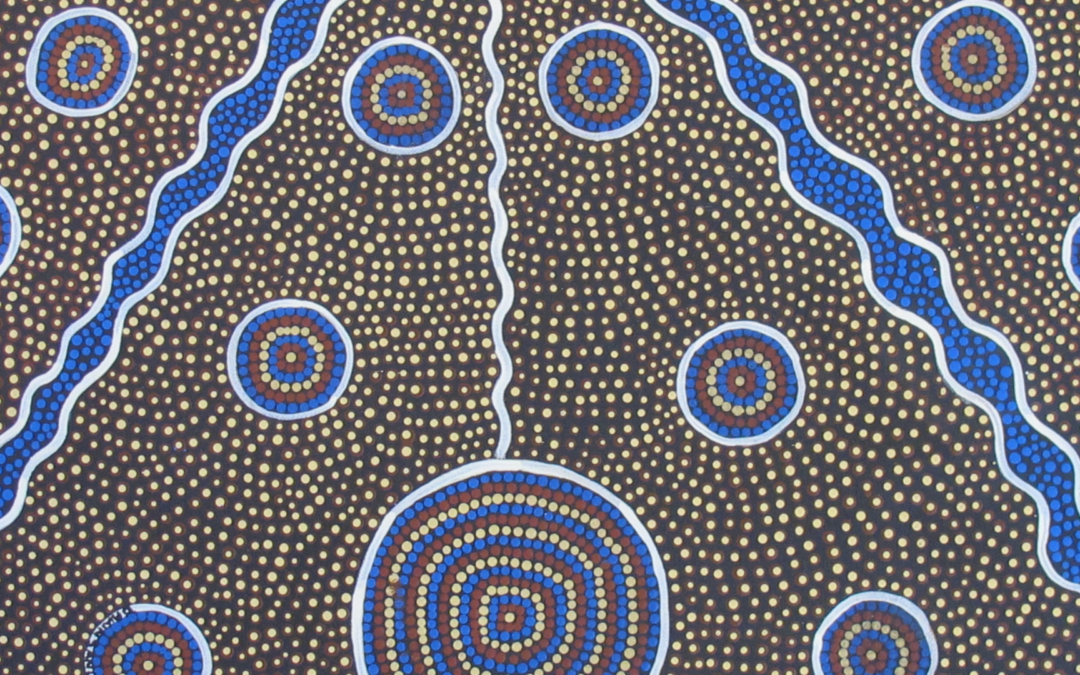
Art has always been at the heart of Aboriginal and Torres Strait Islander cultures — not merely as decoration, but as a profound language for sharing stories, mapping Country, and passing knowledge from generation to generation. During NAIDOC Week, Kenmore Hills Early Learning is proud to explore this rich tradition through respectful, meaningful creative experiences with our children.
Understanding Indigenous Art Before We Create
At Kenmore Hills Early Learning, we are committed to approaching Indigenous art with deep respect and genuine cultural understanding — not as a craft activity to fill time, but as an entry point into one of the world’s oldest and most sophisticated artistic traditions.
Before our children pick up a brush, our educators take time to:
– Share the stories and meanings behind different artistic traditions
– Explain that Aboriginal art is a living, sacred practice, not just a visual style
– Discuss the difference between respectful appreciation and cultural appropriation
– Use resources and books by Aboriginal creators and educators to guide our program
This careful approach ensures that our creative explorations are a celebration, not a caricature, of First Nations culture.
The Languages of Indigenous Art
Aboriginal art uses a rich vocabulary of symbols, patterns, and marks that carry deep meaning. While the specific meanings vary between language groups and regions, some common elements include:
– Concentric circles — often representing meeting places, campsites, or waterholes
– Dots — used across many traditions, particularly in Western Desert art
– Straight and curved lines — representing travel routes, rivers, or boundaries
– Animal tracks — depicting the animals of Country and their movements
– Hand stencils — one of the oldest art forms in Australia, representing presence and identity
Our educators share these concepts in age-appropriate ways, helping children understand that every mark in Indigenous art carries a purpose and a meaning.
What Creative Exploration Looks Like at Kenmore Hills
During NAIDOC Week, our children engage in a range of art experiences inspired by Indigenous traditions:
Dot Painting Explorations
Using cotton tips, fingers, and small tools, children create dot paintings inspired by the vibrant colours and patterns of Western Desert art. Rather than copying specific sacred designs, children are invited to create their own symbolic artworks, choosing colours and symbols that represent their own stories.
Hand Print and Stencil Art
Children create hand stencils using paint — connecting to one of humanity’s oldest art-making traditions. We discuss how hand stencils have been found on rock walls across Australia for tens of thousands of years, representing “I was here.”
Story Mapping
Inspired by the way Indigenous artists use art to map Country and tell stories, children create their own “story maps” — artistic representations of their own journey to the centre, their home, their favourite places. This is a deeply personal and meaningful creative experience.
Natural Materials Art
We use ochre-inspired natural pigments, leaves, bark, and natural textures to create artworks that connect to the land. This grounds the experience in a sensory understanding of Country and materials.
Celebrating Outcomes With Respect
The artworks our children create during NAIDOC Week are celebrated as their own creative expressions — inspired by, but not claiming to replicate, the sacred traditions of First Nations peoples. We display them with context, explaining the inspiration and the learning journey behind each piece.
Keywords: NAIDOC Week art children, Indigenous art early learning, Aboriginal art preschool, Kenmore Hills Early Learning, NAIDOC Week 2025, dot painting children, First Nations art education, cultural art activities preschool, Indigenous creative expression, early childhood Brisbane
Sources and Further Reading:
– NAIDOC Committee – www.naidoc.org.au
– AIATSIS – www.aiatsis.gov.au
– Reconciliation Australia – www.reconciliation.org.au
– Early Childhood Australia – www.earlychildhoodaustralia.org.au
– Australian Children’s Education & Care Quality Authority (ACECQA) – www.acecqa.gov.au
– Raising Children Network – www.raisingchildren.net.au
Recent Comments